
When Active talks to clients about office design, the conversation usually centres on collaboration, culture and making better use of space. Those things matter — but there’s a question that sometimes gets missed: Does the office actually help everyone do their best work? In our opinion, for many neurodiverse employees, the answer is often “not consistently.” In recognition of World Autism Awareness Day 2026 we wanted to highlight how office design can support neurodiversity in practical and achievable ways.
A workplace can look modern, creative and high-performing on paper, while still being exhausting to employees who are neurodiverse to navigate in practice. Noise, glare, hot-desking, visual clutter, unclear rules, and a lack of privacy can create unnecessary barriers for people with autism, ADHD, dyslexia, dyspraxia, sensory processing differences, anxiety, and other cognitive or neurological differences.
The good news is that designing for neuro-inclusivity doesn’t require a complete office overhaul. In many cases, it means making smarter choices about sensory load, flexibility, and clarity.
The first shift is to stop presuming that there is one “ideal” way to work. There isn’t. Some tasks require deep concentration. Some need collaboration. Some people think best in quiet, low-stimulation environments. Others need movement, variety or visual structure. A well-designed office should reflect that reality by offering a range of work settings, not a one-size-fits-all open plan.
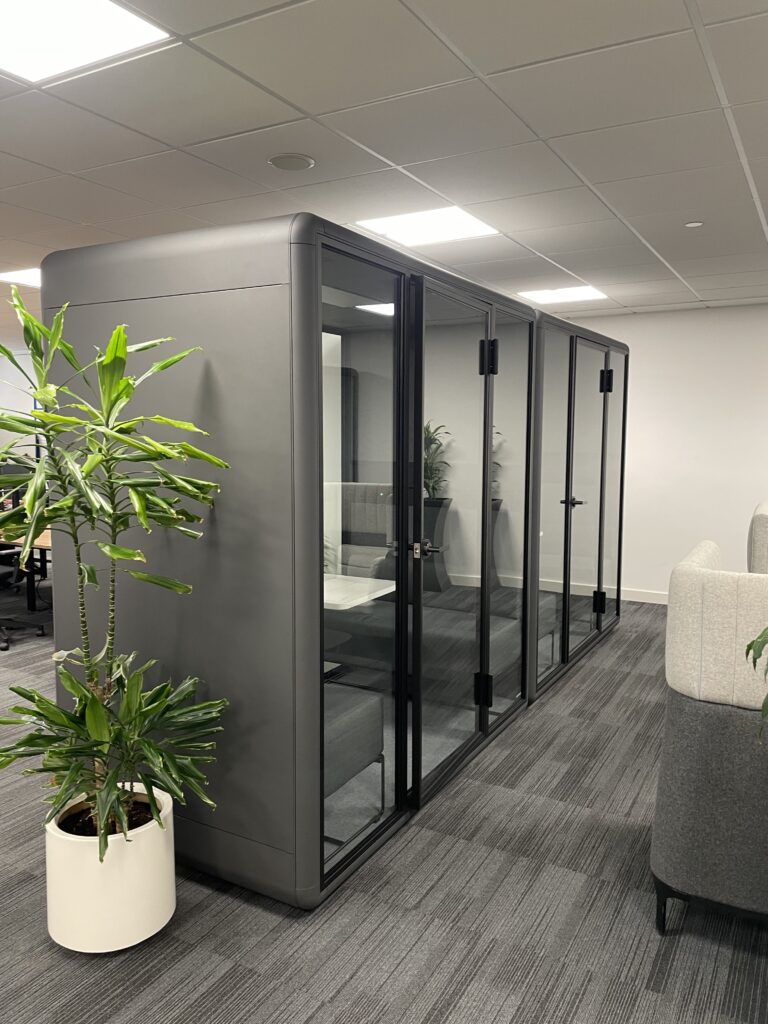
One of the biggest issues is noise. Background conversations, ringing phones, impromptu meetings and general office buzz can make concentration difficult for anyone — but for some employees, it can be genuinely overwhelming. Creating quiet zones, adding acoustic treatment, offering enclosed rooms for calls, and normalising the use of headphones can make a significant difference. At Active, we often include and install pod systems of varying sizes into our office designs, such as the one shown below. They offer an ideal solution to quiet space in a busy office.
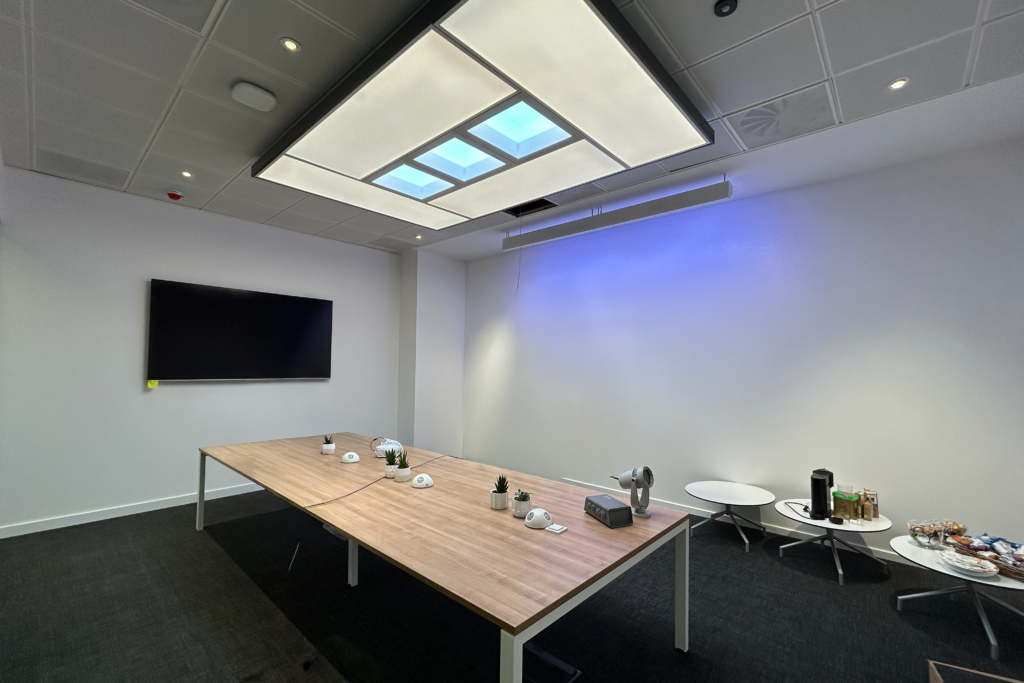
Lighting is another area that is often underestimated. Harsh overhead LEDs, screen glare and poor contrast can be uncomfortable or fatiguing. Where possible, offices should maximise natural light, use softer indirect lighting, and give employees some control over their local environment. Active partners with some fantastic providers of natural lighting such as NatureConnect from Signify.
Then there’s predictability. This is a major factor in inclusive design and one that often gets lost in trendy workplace strategies. Flexible working should not mean constant uncertainty. For some employees, knowing where they’ll sit, where to take a call, how to book a room, or where to go for quiet work can dramatically reduce stress and cognitive load.
That’s why office design is only part of the picture. Policy and culture matter just as much. The most effective workplaces don’t just offer choice, they make that choice socially acceptable and operationally easy.
Making practical changes can be surprisingly straightforward:
- Offer workers separate quiet and collaborative zones
- Provide private spaces for calls or decompression
- Ensure that signage and wayfinding is clear
- Reduce visual clutter
- Allow a defined regular desk use where needed by a worker
In our experience, making these changes doesn’t just benefit neurodiverse employees, they can improve the workplace for everyone. A calmer, clearer, more flexible office tends to support better concentration, lower stress, more inclusive collaboration, and fewer avoidable frustrations across the board.
Ultimately, neuro-inclusive office design is not about creating “special” spaces for a small group of people. It’s about recognising that good work happens under different conditions for different people, and designing workplaces that reflect that reality.
The best offices are not the loudest, busiest or most visually impressive, they are the ones that allow more people to thrive. If you are thinking of designing or refurbishing your office space and want to ensure that you are building in neuro-inclusivity into the scheme – talk to Active.
📞 0118 944 2903