
Active Workplace Group has witnessed a lot of market expectation around tougher future standards for rented buildings, and certainly the government has also been consulting on wider EPC reform. But the current official position is that the government is reforming the EPC framework itself — including how EPCs are measured and when they are required — rather than having already enacted a new commercial minimum such as ‘C’ by 2027 or ‘B’ by 2030. Despite this, for UK offices, improving an Energy Performance Certificate (EPC) rating is no longer just a compliance exercise. It is now closely tied to asset value, occupier demand, operating costs and decarbonisation strategy. EPCs rate buildings from A to G, and for commercial property they remain a key benchmark when leasing or selling space. They also sit alongside tightening policy and market expectations around building performance.
Depending on whether we are operating in our capacity as designers and builders or Facilities Management suppliers, at Active we advise our clients that the most effective approach is to treat EPC improvement as both a technical upgrade programme and a design opportunity. Some of the checks and balances that we use as a business are listed below.
Fabric First
One of the quickest ways to improve EPC outcomes is to reduce the building’s demand for heating and cooling before upgrading systems. That means focusing on the building envelope: insulation, glazing, air tightness and solar control. Poor-performing façades, leaky windows and under-insulated roofs force HVAC systems to work harder, increasing both energy use and carbon emissions. Upgrading to double or triple glazing, improving insulation and reducing uncontrolled air leakage can materially improve EPC performance because the certificate heavily reflects the thermal efficiency of the building fabric. Government proposals for EPC reform also place growing emphasis on fabric performance as a meaningful metric. At Active we are often called to upgrade fabric performance and often under ‘actively operating” circumstances – no mean feat but a challenge we take pride in achieving. For our designers we ensure that we specify finishes and fit outs that support thermal performance rather than undermine it.
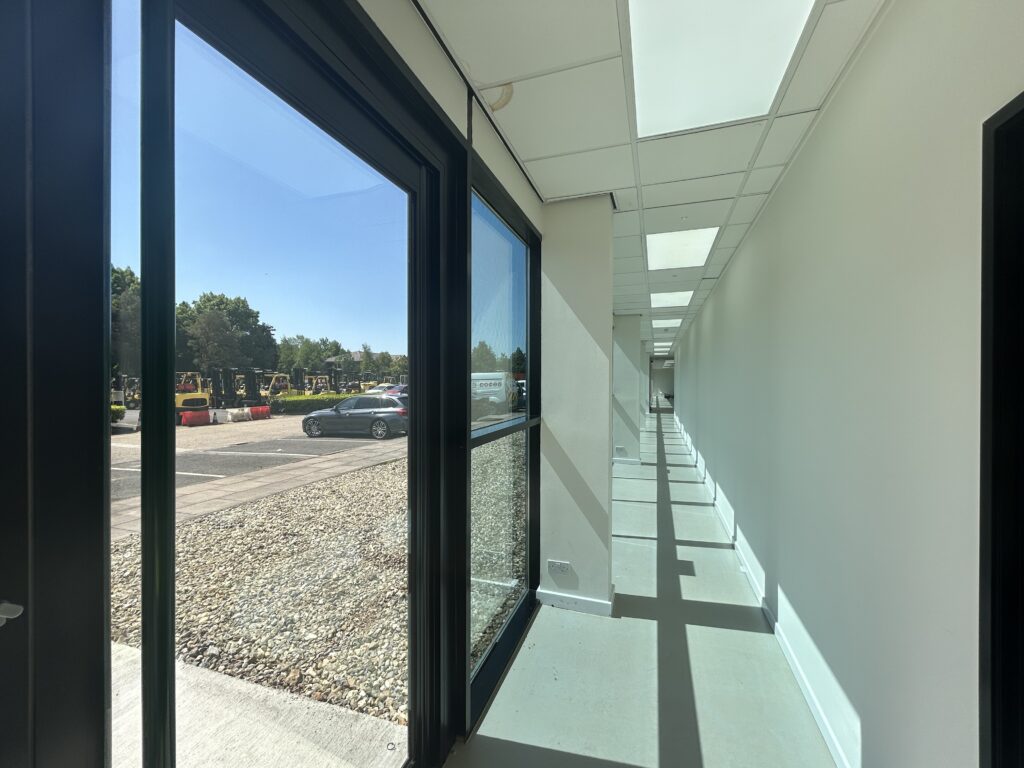
Service Upgrades for HVAC & Controls
If fabric is the foundation, building services are usually where the biggest practical gains sit. Many of the older offices our team happen across, still operate with outdated boilers, inefficient chillers, poor zoning and constant-volume ventilation systems. We keep our engineering department well versed and trained in the latest and most efficient systems and their maintenance. They are then able to expertly support Estate and Facilities Managers by targeting energy efficiencies through uprated heat pumps, low-carbon systems, and demand command-controlled ventilation. They also have expertise in a variety of modern BMS (Building Management Systems), smart zoning and occupancy-based controls which can be incorporated into new designs or retrofitted to help performance. Even relatively modest control upgrades fitted by Active engineers, can deliver strong results because EPCs are influenced by how efficiently core systems are modelled to perform. In our opinion, many offices still miss these “easy wins,” despite them being among the lowest-cost retrofit measures.
Rethink Lighting
Lighting upgrades are often one of the simplest interventions with a clear payback. Replacing legacy fluorescent systems with LED lighting, coupled with daylight dimming, presence detection and task-based lighting design, can reduce electricity demand significantly. The designers at Active are tasked with planning layouts that maximise daylight, rationalise equipment use and support lower-energy workplace behaviours in every project we pitch or complete.
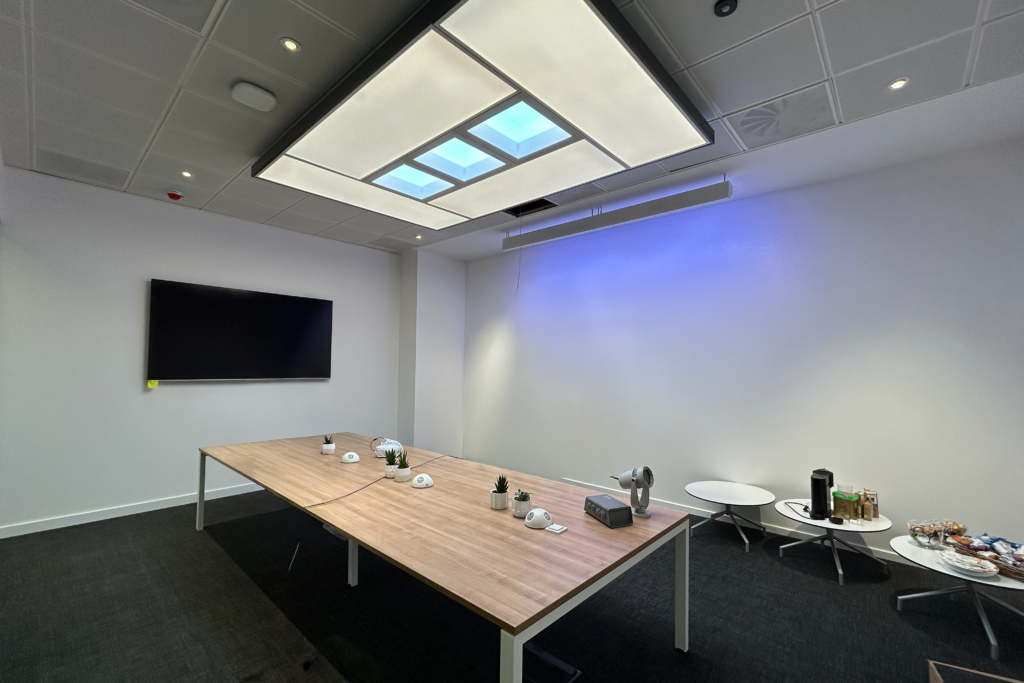
Refurbishment is a Retrofit Opportunity
One of the most overlooked but effective EPC improvement strategies is getting the timing right. The best EPC improvements often happen when linked to lease events, dilapidations, refurbishments, M&E replacement cycles or CAT A/CAT B fit outs. Rather than waiting for a major “deep retrofit,” Active Workplace Group encourages our clients to use every planned intervention to improve performance incrementally. In our opinion this staged approach is often more realistic and commercially viable than a single all-at-once overhaul although as a business we do plenty of both.
How Does This Effect Decarbonisation?
The carbon opportunities are substantial. Commercial buildings account for a significant share of UK built-environment emissions, and UKGBC estimates that commercial buildings represent around 23% of the built environment’s carbon footprint. For offices specifically, UKGBC says the sector needs an overall 59% reduction in energy consumption by 2050, while deep retrofit can often achieve around 60–65% reductions in operational energy use. In practical terms, that means an office moving from a poorly performing EPC band and outdated services toward a more efficient, electrified, well-controlled building could deliver very meaningful operational carbon savings, especially as the UK electricity grid continues to decarbonise.

Improving EPC ratings is not about chasing a certificate in isolation even if we are proud of our head office’s A grade! For Active Workplace Group it is about supporting all of our clients to create better-performing, lower-carbon, lower-cost workplaces. In our opinion the strongest results usually come from combining fabric upgrades, efficient building services, smarter controls and well-timed refurbishments. Done properly, EPC improvement is not just a compliance task. It is one of the clearest routes to making UK offices more resilient, lettable and future-ready. If we can help or you would just like advice get in touch. Active has the deep and wide experience to help you get it right first time.
📞 0118 944 2903