
Mental Wellbeing and Your Workplace
On Mental Health Awareness Week 2026, it’s more important than ever for businesses to recognise the impact workplace environments can have on employee wellbeing. As conversations around mental health continue to grow, workplaces must evolve too, creating spaces where employees feel supported, safe, and able to thrive.
Businesses now have an opportunity to rethink how their environments, cultures, and ways of working can better support employee wellbeing.
When Workplace Pressure Becomes Too Much
According to the HSE, over 950,000 UK workers experienced work-related stress, depression, or anxiety in 2024/25.
Stress and anxiety frequently go hand in hand within the workplace. Tight deadlines and excessive workloads can contribute to overwhelming feelings of pressure. When these issues are left unaddressed, they can quickly impact not only employee wellbeing, but also business performance. Alongside this, workers in high-pressure roles often experience burnout. Often caused by prolonged stress and overworking, burnout can leave employees mentally, emotionally, and physically exhausted. Despite working longer hours and pushing themselves further, employees can experience declining productivity.
So, how can businesses ensure they are doing the most to support their employees?
Businesses can no longer afford to view employee mental health and wellbeing as separate from the spaces people work in. The environments we surround ourselves with have a lasting impact on the way we think, feel, and perform. Healthier workplaces require a balance between environment and company culture.
Are you prioritising wellbeing and creating a space where employees can collaborate, communicate, and feel comfortable?
Designing Workplaces That Support Wellbeing
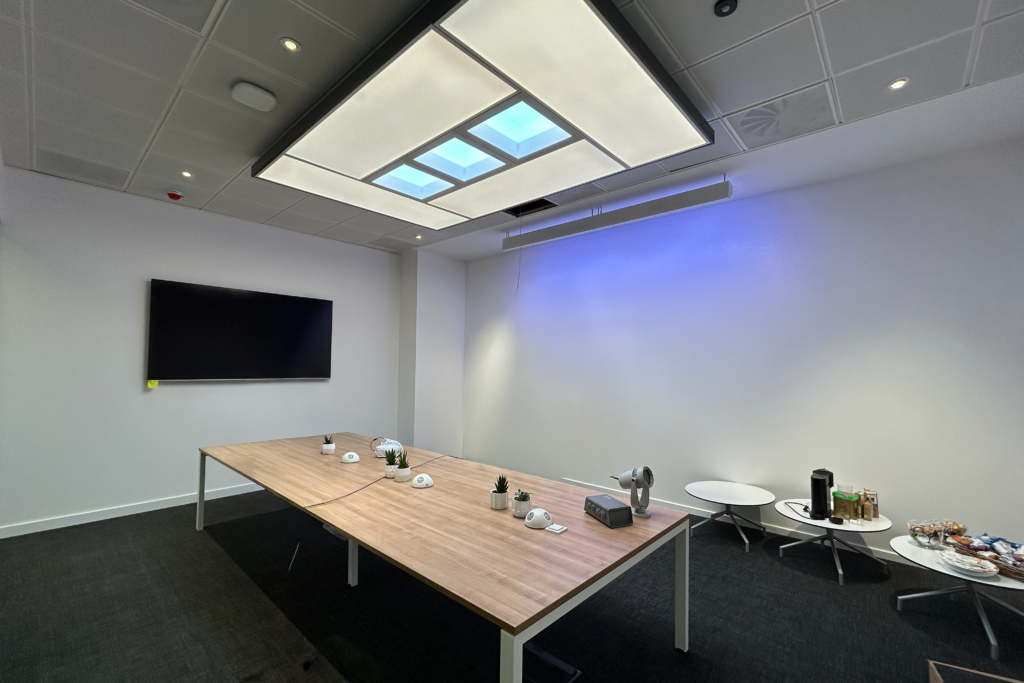
As explained by Healthline, sunlight can positively impact mental health by increasing serotonin levels, helping to combat feelings of stress, anxiety, and depression. It’s important for businesses to consider workplace lighting. Is the space bright enough? Is there enough natural light? Signify offers an innovative lighting feature called NatureConnect, designed to mimic natural daylight and create a brighter, more uplifting atmosphere. This can be especially effective in spaces such as windowless meeting rooms or dark corners of your office space. Alongside boosting mood, natural light can also help reduce fatigue, leaving employees feeling more energised and focused whilst they work.
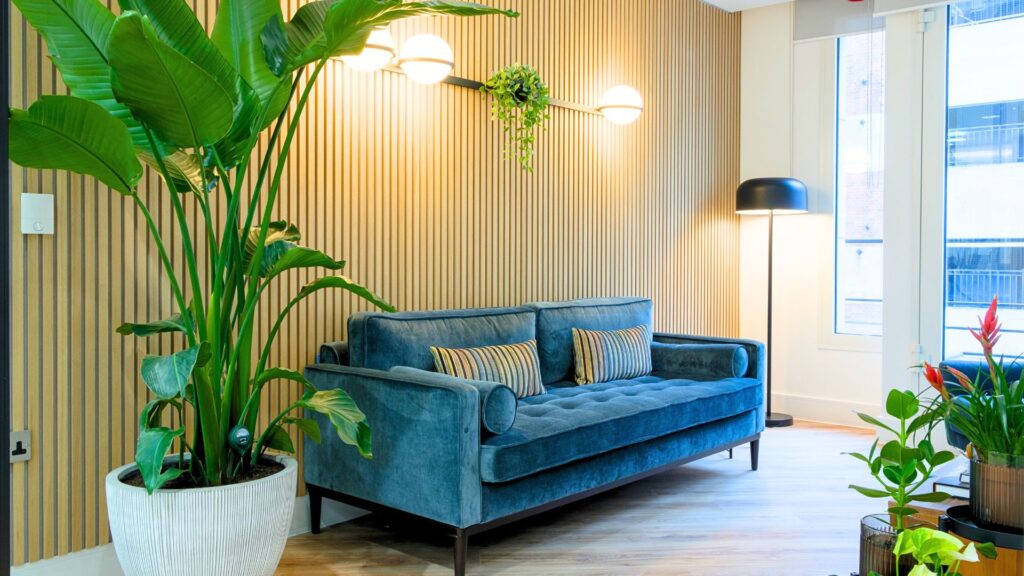
Biophilic office design is not simply a workplace trend — there are scientific studies showing the positive effects plants and greenery can have on employee wellbeing. According to Plant Plan, plant-rich environments can help reduce tension, anxiety, depression, fatigue, anger, and hostility within the workplace. For businesses concerned about the upkeep of plants and greenery, companies such as Plant Plan can help maintain these spaces professionally. Investing in biophilic design has become a no-brainer for many businesses, with the positive impact on employee mental health, productivity, and workplace atmosphere becoming increasingly difficult to ignore.
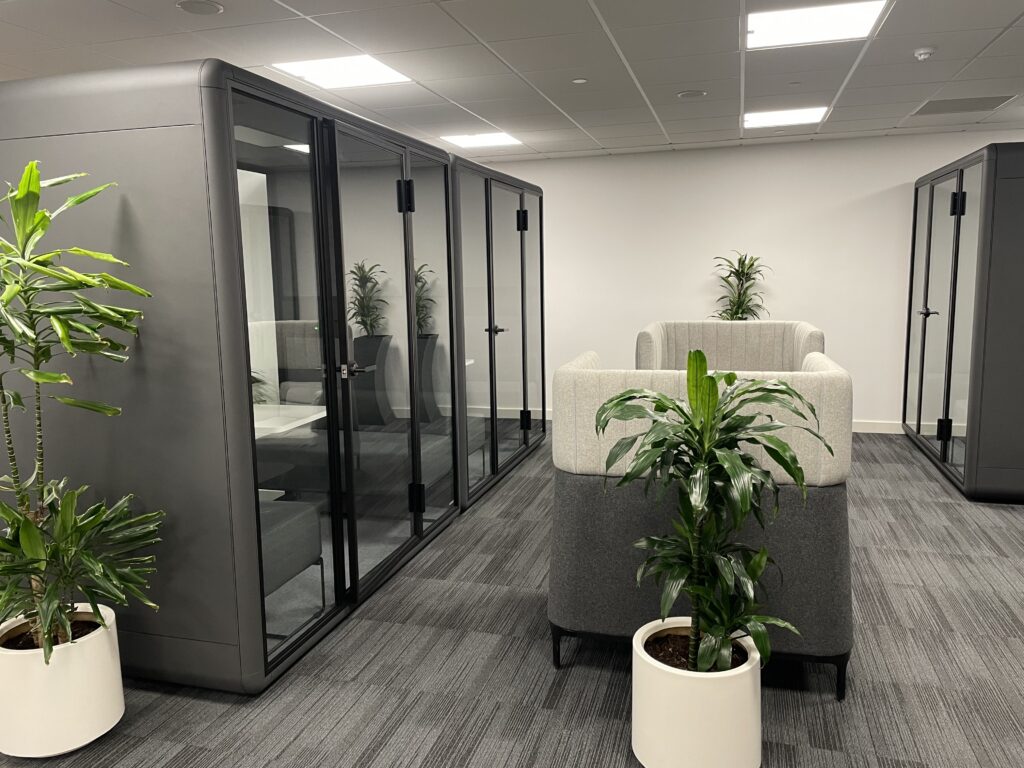
Following the pandemic in 2020, hybrid and flexible working has become an increasingly important topic of conversation. As more businesses encourage employees back into the office, it’s important to consider the transition from home working to office-based environments. Introducing collaborative workspaces, quiet focus areas, and private pods allows employees to work in ways that suit them best. For many people, sitting behind a desk for eight hours a day simply isn’t productive, which is why flexible workspaces can offer employees more freedom to thrive.
When making design choices within workspaces, employers should consider acoustics and sound levels. Loud or excessive noise within an office can be distracting and effect concentration – especially if you have a lot of people answering phone calls. Private office pods are a great solution to this, allowing your employees to have a space in which they can work un-interrupted.
Collaborative areas are also important as they encourage communication, teamwork, and relationship-building. Businesses should aim to create environments that connect people rather than isolate them. Flexible spaces are equally important when designing neuro-inclusive workplaces, supporting employees with different working styles, needs, and preferences. You can read our insight about designing neuro-inclusive workplaces here. Ultimately, businesses must think about people as individuals, rather than expecting everyone to work in the same way.
Creating Happier, Healthier Workplaces
Workplace design plays an important role in promoting wellbeing within your company, however workplace culture plays an even bigger one. Without a strong foundation of understanding, collaboration and support, employees will not be able to perform to the best of their abilities.
At Active Workplace Group, we believe that successful businesses are built on the people that drive them forward. By creating workspaces that prioritise wellbeing through thoughtful design, we know we are making a difference.
Find out more about how our services can help you and your team here.
Or reach out to us using the links below!
📞 0118 944 2903